


Lagavulin
Here, in the still Gaelic-speaking community around Port Ellen on the island's southeast coast, 12 people today produce the pungent, dark Lagavulin whisky—at least since 1816, in a historic location.
The sea has shaped everything here. A narrow rim of slate and hornblende forms a coastal strip in front of the quartzite of the hills above, bringing Lagavulin its romantic bay and the island of Texa.
Islay primarily means peat. For miles around, the peat bogs stretch across the west of the island and provide the raw material that so strongly influences the character of the southeast Islay malts.
And Lagavulin is probably the best-known of them. The rich, frothy water of Lagavulin flows down the Brown Burn from the Solan Loch Mountains above the distillery. Although Lagavulin shares its coastline with two neighboring distilleries, the then owner Peter Mackie made every effort to have exclusive use of the water.
Access rights to the water and the surrounding land were fiercely contested at the time, and Mackie's perseverance secured this legacy for Lagavulin.
The barley from Lagavulin is distilled, fermented in nearby Port Ellen, and has a strong "peaty aroma"—it is exposed to peat smoke approximately twenty times more than Cragganmore, a typical Speyside whisky. Fermentation of the barley is also a slow process. Between 55 and 75 hours, the fermented barley is left to develop a full peat-like flavor.
The four firing pots at Lagavulin, of which 2 are pear-shaped in the style adopted by Malt Mill, take the torf-like "wort" (spice) and give it all the time and care it deserves.
Following the original practice, Lagavulin undergoes the slowest distillation of all Islay malts: approximately five hours for the first distillation and more than nine hours for the second. In the opinion of many, this lengthy process is the reason for Lagavulin’s characteristic roundness and the soft, gentle "edges" that are so highly appreciated by its followers.


Lagavulin
Sorting
Here, in the still Gaelic-speaking community around Port Ellen on the island's southeast coast, 12 people today produce the pungent, dark Lagavulin whisky—at least since 1816, in a historic location.
The sea has shaped everything here. A narrow rim of slate and hornblende forms a coastal strip in front of the quartzite of the hills above, bringing Lagavulin its romantic bay and the island of Texa.
Islay primarily means peat. For miles around, the peat bogs stretch across the west of the island and provide the raw material that so strongly influences the character of the southeast Islay malts.
And Lagavulin is probably the best-known of them. The rich, frothy water of Lagavulin flows down the Brown Burn from the Solan Loch Mountains above the distillery. Although Lagavulin shares its coastline with two neighboring distilleries, the then owner Peter Mackie made every effort to have exclusive use of the water.
Access rights to the water and the surrounding land were fiercely contested at the time, and Mackie's perseverance secured this legacy for Lagavulin.
The barley from Lagavulin is distilled, fermented in nearby Port Ellen and has a strong "peaty aroma"—it is exposed to peat smoke about twenty times more than Cragganmore, a typical Speyside. Fermentation of the barley is also a slow process. Between 55 and 75 hours, the fermented barley is left to develop a full peat-like flavor.
The four firing pots at Lagavulin, of which 2 are pear-shaped in the style adopted by Malt Mill, take the torf-like "wort" (spice) and give it all the time and care it deserves.
Following the original practice, Lagavulin undergoes the slowest distillation of all Islay malts: approximately five hours for the first distillation and more than nine hours for the second. In the opinion of many, this lengthy process is the reason for Lagavulin’s characteristic roundness and the soft, gentle "edges" that are so highly appreciated by its followers.
Sorting

Lagavulin Whisky Distillers Edition
From 95,90€137,00€ / l

Lagavulin Whisky 10 y.o. Travel Exclusive
From 79,90€114,14€ / l

Lagavulin Whisky 16 y.o.
From 74,90€107,00€ / l

Lagavulin Whisky 8 y.o.
From 61,90€88,43€ / l
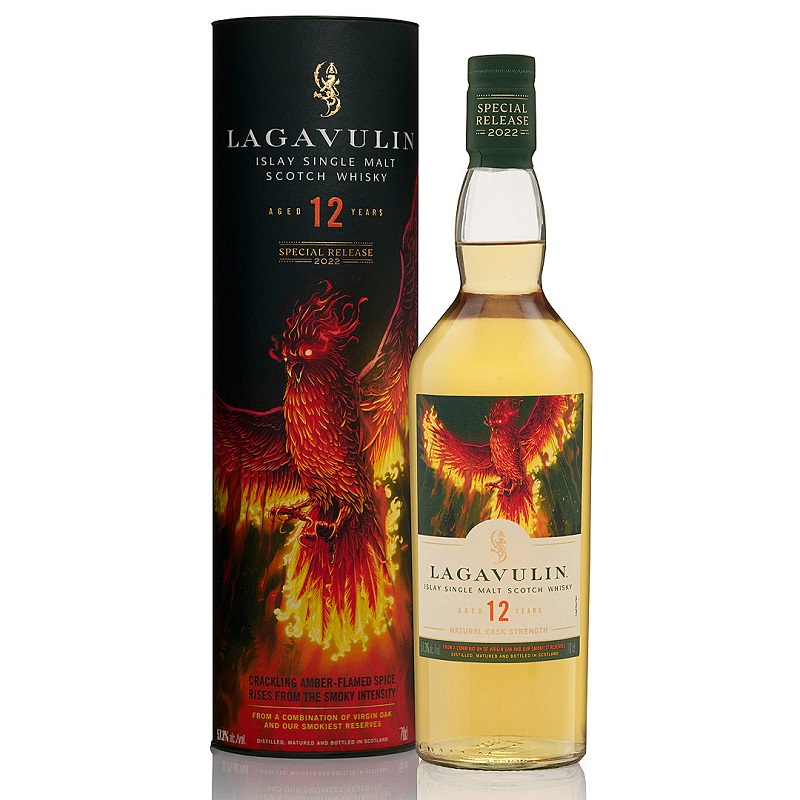
Lagavulin Whisky 12 y.o. Special Release 2022
From 149,90€214,14€ / l